Summary: Where counterfeit vaping products actually come from, the checks that catch them, and why price is the weakest signal.
Counterfeit vaping products are not a niche problem. They are a normal feature of a market where demand outruns authorised supply, and they are usually indistinguishable from the real thing until the device fails — or worse, until the strength printed on the box is not the strength inside it.
Why fakes exist in this category specifically
Vaping hardware is cheap to copy: a battery, a sensor, a plastic shell, a coil. There is no complex supply chain to fake, and the packaging is printed, not manufactured. Combine that with a product that is frequently sold outside formal distribution, and you get a market where a counterfeit costs a tenth of the real unit to make and sells at 90% of the real price.
The checks that actually work
- Batch code and verification route. Most legitimate manufacturers print a batch code and offer a lookup. A box with no code, or with a code that returns nothing, is the strongest single signal.
- Packaging quality under a light. Counterfeits use cheaper card stock, uneven lamination and misregistered printing. Look at the edges and the fold seams, not the front design.
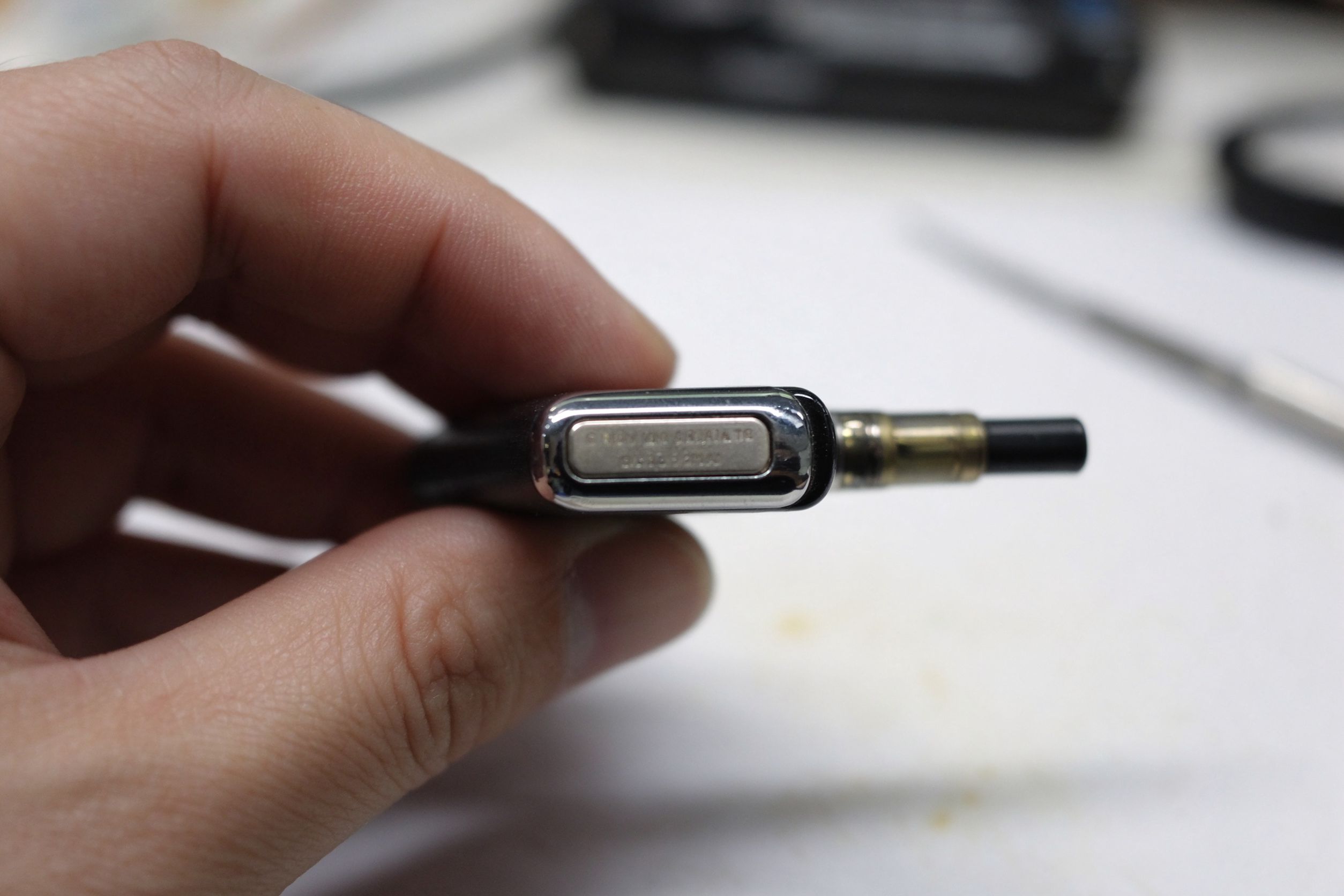
- Weight and finish of the device. Real devices are consistent — same weight, same seam alignment, same button travel. A copy usually feels lighter and the seams are uneven.
- The printed strength. If the box says 5% and the device hits like 2%, the label lied. That is the failure that matters most for your health, and it is common in unverified stock.
- Price against the market. 40% below every other listing is not a bargain, it is a warning. Price is the weakest signal on its own, but it is a strong one in combination with the others.
Where the risk concentrates
- Convenience channels — gas stations, corner shops and market stalls, where stock turns over fast and no one checks provenance.
- Resale and social marketplaces, where there is no shop to hold responsible.
- Deep-discount online listings with no published specifications and no returns policy.
Risk is lowest where the seller publishes specifications, offers returns and states its shipping rules — because a seller who will take a return has to know what it sold you.
Why this is a health question, not just a money one
The label is the only information you have about what you are inhaling. A counterfeit can carry a wrong nicotine concentration, an unlisted flavouring, or a battery with no protection circuit. The first is a dosing problem, the second is an unknown exposure, the third is a fire risk while charging. None of those are visible from the outside, which is why sourcing is the actual control you have.
A five-point buying standard
Before you pay, confirm all five:
- The listing names the manufacturer and model, not just a flavour.
- Strength is published in mg/mL and percentage.
- The seller has a returns or defect policy in writing.
- The seller publishes shipping restrictions and age verification.
- Battery capacity and resistance are stated.
A shop that meets five out of five has effectively priced counterfeits out of its own catalogue, because a fake cannot supply those specifications.
SmokVera publishes model, strength, resistance and battery capacity on each listing, plus a returns policy — the same five-point standard applied to its own stock.
Buy verified listings at SmokVera
Bottom line
You cannot authenticate a vape device from a photo, and you should not try. Choose sellers who publish specifications and accept returns; that filter does more than any visual inspection.
For the regulatory backdrop, see What the FDA PMTA Process Means.
For adults 21+. Nicotine is an addictive chemical. This article is general information, not legal advice.