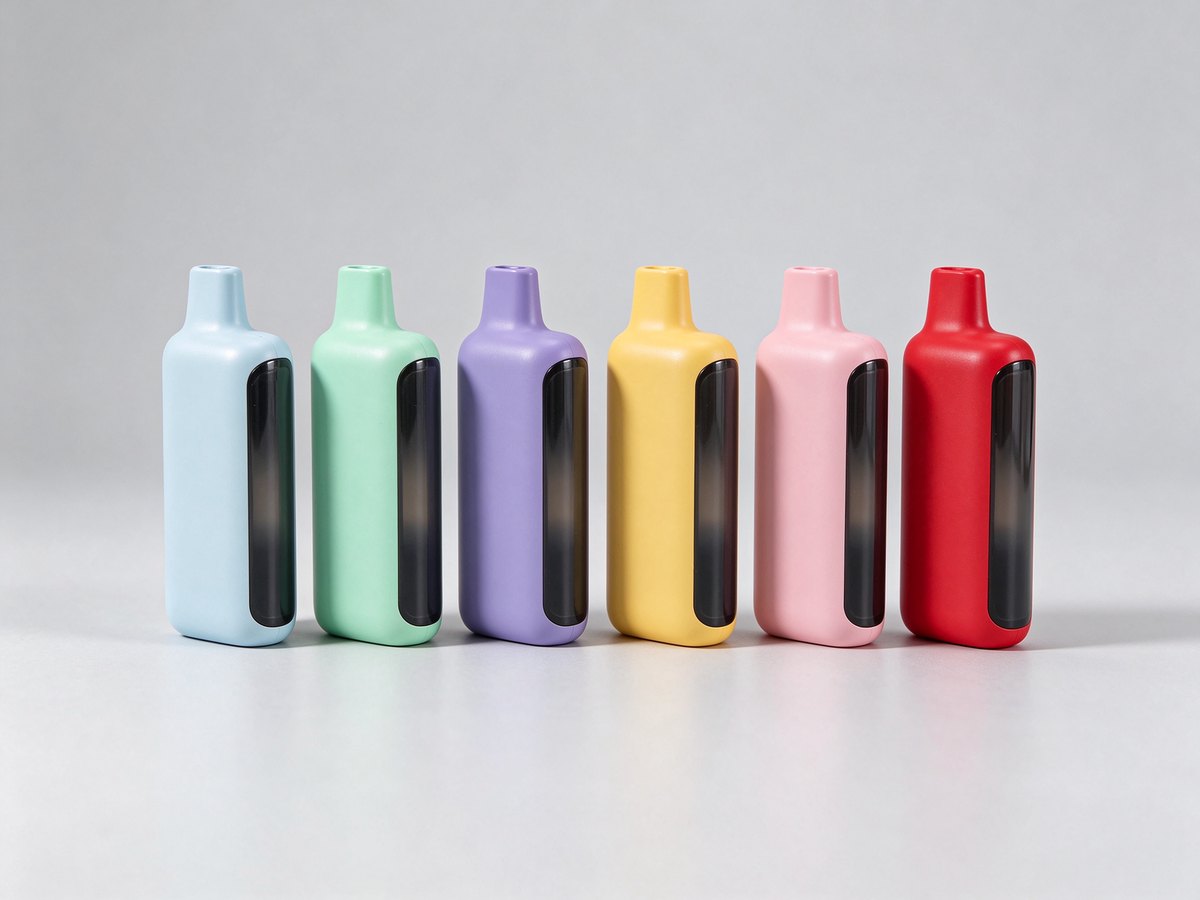
Summary: Both Tomoro disposables at current US prices: 35,000 vs 50,000 rated puffs, battery and display differences, and what each actually costs per month.
Two disposables from the same brand, $4.45 apart, and rated 35,000 versus 50,000 puffs. The interesting part is that the cheaper one is not the better value per puff — and the more expensive one is not better on every count either.
This is a specification comparison, not a lab test. We have not measured delivered puff counts on either unit; where a number is the manufacturer's rating, it says so. Rated figures are the ones printed on the box, and the ones every comparison page in this category quietly treats as measured truth.
The numbers, side by side
| Tomoro D15 35K | Tomoro D20 50K | |
|---|---|---|
| Current price | $14.50 | $18.95 |
| Rated puffs (regular mode) | Up to 35,000 | Up to 50,000 |
| Rated puffs (boost mode) | Lower — not published separately | Up to 30,000 |
| E-liquid capacity | Not published | 18 mL |
| Battery | 600 mAh, rechargeable | 850 mAh, rechargeable |
| Charging | USB-C (cable not included) | USB-C |
| Coil | Dual mesh | Dual mesh, 1.0Ω and 0.19Ω |
| Display | Digital display | Not stated |
| Nicotine | 5% where stocked (check the pack) | 5% (50 mg) |
| Cost per 1,000 rated puffs | $0.41 | $0.38 |
The 18 mL figure on the D20 is the only hard capacity number in this pair, and it is the one that makes the puff rating plausible. 50,000 puffs out of 18 mL works out to roughly 0.36 mL per 1,000 puffs — which is on the low side of what disposables actually consume, meaning the rating leans optimistic but is not absurd. The D15's rating has no published denominator at all, so "35,000" is a claim without a supporting measurement.
What it costs over a month of real use
The box rating is not what decides your monthly spend. Delivered puffs do, and delivered is usually 60–80% of rated once you account for boost use, long draws and the flat-taste tail at the end of the reservoir. Use the rated number as a common denominator and the ranking stays the same, but the absolute cost rises for both.
At a moderate 400 puffs a day:
- D20: about 125 rated days, roughly $0.15 per day.
- D15: about 87 rated days, roughly $0.17 per day.
Knock both figures down 30% for realistic delivered life and you get $0.21 and $0.24 per day. The gap is real but small — about $1 a month at that pace. If you vape 800 puffs a day, it doubles to roughly $2 a month, which still does not justify buying the bigger device purely on price.
Where the D20 actually earns its $4.45
Not the price-per-puff — the difference is too small to matter. It earns it on two things that people notice in week two rather than day one:
- Battery headroom. 850 mAh against 600 mAh. Both recharge over USB-C, but a larger cell means fewer mid-day top-ups and less sag toward the end of the reservoir. If you are away from a charger for a whole shift, this is the deciding spec.
- A published liquid volume. 18 mL is checkable. It does not guarantee the puff count, but it tells you the device is not running a 12 mL reservoir behind a 50,000 sticker.
Where the D15 wins
The D15 has something the D20's published spec sheet does not list: a digital display. If you have ever had a disposable die with no warning, a percentage readout is worth more than 15,000 extra rated puffs you will never count. The D15 is also the smaller financial commitment — $14.50 to try a flavour and a brand without committing to a device that claims to last three months.
One practical annoyance: the D15 ships without a charging cable. Most people have a USB-C cable; if you do not, budget for one.
Which one to buy
- You vape more than 400 puffs a day, or you are away from a charger all day: the D20. The 850 mAh cell and the 18 mL reservoir are the two numbers that actually change your week. Tomoro D20 — current price at SmokVera.
- You want to see the battery level, or this is your first device from this brand: the D15. Lower upfront, display included. Tomoro D15 35K — current price at SmokVera.
- You buy purely on cost per puff and nothing else: the D20, but only by about 8%, which is not a reason to change your mind if the D15's display appeals to you.
Two things the spec sheet will not tell you
Boost mode halves the headline number. Both devices publish a second, lower rating for their higher-output mode — 30,000 for the D20. If you vape in boost, your real cost per month is based on that number, not the big one on the front of the box.
Batch variation is normal. The same model can differ between production runs, especially in coil quality. Two units of one model behaving differently is a known issue in this category, not a counterfeit signal — how to tell the two apart is covered in how to spot counterfeit vapes.
Legality before you order. Whether either device can legally reach your address depends on your state, not on the device. The state-by-state online sales table lists flavour bans, excise tax and delivery restrictions for all 50 states.
Related: Do 50,000-puff devices actually cost less per day? · Geek Bar Pulse vs Pulse X · How we compare devices · Our comparison methodology
More in the series: Disposable Vapes: the complete guide. Also worth reading: Pulse X vs Vapekool Kolos, Tomoro D20 vs Vapekool Kolos 40K, 18 mL, Two Labels, Tomoro Disposable Vapes, Vapekool Kolos 40K, Lost Mary vs Geek Bar, Geek Bar Flavors.